
Robin’s Reading Room
“A personal collection of the books that shaped how I think about AI, leadership, and the human future.”
— Robin Green, Author of The Intelligence Loop
Featured Titles
Six books Robin returns to most often. Each one earns its place on the shelf.

ETHAN MOLLICK
Co-Intelligence: Living and Working with AI
The most practical and honest guide to working alongside AI available today. Mollick argues for treating AI as a genuine partner. Essential reading for anyone navigating this moment.

STUART RUSSELL
Human Compatible: AI and the Problem of Control
The definitive case for why AI systems must be built around human values. Rigorous, important, and written for leaders — not just technologists.
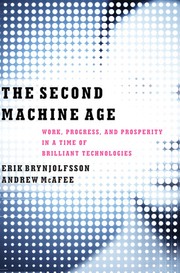
BRYNJOLFSSON & McAFEE
The Second Machine Age
Still the best framing of the economic stakes of AI. What happens to work, growth, and society when machines become capable of cognitive tasks.

KISSINGER, SCHMIDT, MUNDIE & FERGUSON
Genesis: Artificial Intelligence, Hope, and the Human Spirit
Four of the most consequential thinkers on AI make a sweeping argument about intelligence, meaning, and what AI demands of humanity.

IANSITI & LAKHANI
Competing in the Age of AI
Harvard Business School professors make the definitive case for how AI is restructuring competitive advantage. A strategy book, not a technology book.
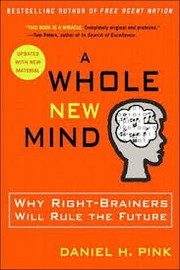
DANIEL H. PINK
A Whole New Mind
Pink's argument that empathy, design, and story are the irreplaceable human edge has only grown more relevant. Written before the AI wave — even more true now.
The Full Collection
Books referenced in The Intelligence Loop and essential reading for every leader navigating the AI era.

JAMES LOVELOCK
Novacene: The Coming Age of Hyperintelligence
Lovelock's final and perhaps most startling thesis: that AI will not destroy humanity but partner with it to protect the living planet. A short, profound argument from one of science's great originals.

KISSINGER, SCHMIDT & HUTTENLOCHER
The Age of AI: And Our Human Future
Three of the most consequential thinkers on technology and statecraft examine how AI is transforming strategy, diplomacy, and what it means to be human. Dense and essential.

KAI-FU LEE
AI Superpowers: China, Silicon Valley, and the New World Order
The most authoritative account of the global AI race. Lee argues that implementation, not invention, will determine the winners of the AI era. Required reading for any enterprise executive.

AGRAWAL, GANS & GOLDFARB
Prediction Machines: The Simple Economics of Artificial Intelligence
The clearest economic framework for understanding what AI actually does: reduce the cost of prediction. Once you see it this way, every AI decision becomes simpler to evaluate.

JOHN BROCKMAN (ED.)
Possible Minds: Twenty-Five Ways of Looking at AI
Twenty-five of the world's leading scientists and thinkers grapple with AI's implications for the human future. Breadth and intellectual honesty in equal measure.

RUSSELL & NORVIG
Artificial Intelligence: A Modern Approach (4th Edition)
The definitive university textbook on AI. If you want to understand how AI systems actually work at a foundational level, this is the standard reference. Dense but unmatched in rigor.

GOODFELLOW, BENGIO & COURVILLE
Deep Learning
The authoritative technical reference on neural networks and deep learning. Not for the casual reader, but indispensable for anyone who wants to understand the machinery behind modern AI.

SIMON SINEK
The Infinite Game
Sinek reframes competition from finite wins to infinite play. The leadership principles here — purpose, will, and ethical culture — translate directly to how organizations should approach AI adoption.

STEVEN PINKER
Enlightenment Now: The Case for Reason, Science, Humanism, and Progress
The most comprehensive empirical defense of human progress ever written. Essential counterweight to AI doom narratives and a reminder of what human reason and collaboration have already achieved.

VIKTOR E. FRANKL
Man's Search for Meaning
The foundational text on human purpose under adversity. In an era where AI handles the routine, Frankl's argument about meaning as the core human need becomes more relevant, not less.

HANNAH ARENDT
The Human Condition
Arendt's masterwork on labor, work, and action in the modern world. Her distinction between the animal laborans and homo faber has new urgency when machines can do both.

C.S. LEWIS
Mere Christianity
Lewis's rational defense of Christian faith remains one of the most carefully constructed arguments in modern literature. The chapters on morality and human nature inform the ethical framework of The Intelligence Loop.

C.S. LEWIS
The Abolition of Man
A short, devastating critique of the reduction of humanity to mere nature. Lewis anticipated the dehumanizing potential of technology decades before it arrived. More urgent now than when written.

TEILHARD DE CHARDIN
The Phenomenon of Man
The Jesuit scientist's vision of consciousness evolving toward an Omega Point resonates strangely with questions about AI and collective intelligence. Challenging, visionary, and impossible to dismiss.

JOHN RAWLS
A Theory of Justice
The most influential work in modern political philosophy. Rawls's veil of ignorance as a framework for designing fair systems is directly applicable to AI governance and ethical AI deployment.

CONFUCIUS
The Analects
Two and a half millennia of wisdom on leadership, learning, and virtue. The relational ethics of Confucian thought offer a compelling counterpoint to purely utilitarian approaches to AI ethics.

ARISTOTLE
Nicomachean Ethics
Aristotle's framework for virtuous action and human flourishing remains the most rigorous foundation for thinking about what AI should serve. Practical wisdom — phronesis — is exactly what AI cannot replicate.

AUGUSTINE OF HIPPO
Confessions
Augustine's restless search for truth in a world of distraction speaks directly to the attention economy AI has accelerated. The opening lines — 'our heart is restless until it rests in Thee' — have new resonance in 2026.

DOUGLAS J. MOO
The Letter to the Romans (New International Commentary on the New Testament)
The definitive scholarly commentary on Paul's letter to the Romans. Moo's rigorous exegesis of one of the most consequential texts in Western thought — on justice, grace, and human dignity — informs the ethical and moral framework explored throughout The Intelligence Loop.

D.M. ARMSTRONG
A Materialist Theory of the Mind
Armstrong's landmark philosophical work arguing that mental states are identical to brain states. A foundational text for understanding the philosophy of mind — and a critical counterpoint to questions about whether AI systems can possess anything analogous to consciousness or intent.

KAREN HAO
Empire of AI: Dreams and Nightmares in Sam Altman’s OpenAI
The most reported account of OpenAI’s rise, its culture of secrecy, and the human costs behind the race to AGI. Karen Hao spent years covering AI’s impact on society. The result is essential, uncomfortable reading for anyone who wants to understand where the AI industry actually came from.
The Intelligence Loop reading list. All of it.
Research papers, key voices, essential resources — curated by Robin and growing with every session. Basic and Premium subscribers get full access.
RESEARCH PAPER
Magesh, Surani, Dahl, Suzgun, Manning
Journal of Empirical Legal Studies, 2025
The first preregistered empirical evaluation of AI-driven legal research tools. LexisNexis and Thomson Reuters both hallucinate between 17% and 33% of the time despite marketing their products as
RESEARCH PAPER
Enabling Ethics Mechanisms in the Governance of Algorithmic Artificial Persons (ALAP)
Padmanabhan Poti, Stanton & Stevens — Western Sydney University — Journal of Responsible Technology, 2026
A qualitative evidence synthesis identifying eleven gaps in current AI ethics frameworks. Proposes the AnGEL model — an anticipatory general ethics library for governing autonomous AI systems, agnostic of domain or use case. Essential reading on the structural limits of existing AI governance mechanisms.
RESEARCH REPORT
The Economic Potential of Generative AI: The Next Productivity Frontier
McKinsey & Company — 2023
The landmark McKinsey analysis estimating generative AI could add $2.6-4.4 trillion annually across industries. The report that reframed boardroom conversations about AI from experimentation to transformation. Essential context for any executive making AI investment decisions.
RESEARCH REPORT
How Americans View AI and Its Impact on Human Abilities and Society
Pew Research Center — 2025
The most comprehensive survey data on public attitudes toward AI, including its role in faith, relationships, and work. Reveals the sharp divide between AI optimists and skeptics and where the public draws firm lines on human irreplaceability.
RESEARCH REPORT
Governing AI for Humanity: Final Report
United Nations Secretary-General's Advisory Body on AI — 2024
The United Nations' definitive framework for global AI governance. Developed with OECD, UNESCO, and member states, this report establishes the principles for governing autonomous AI systems at a civilizational scale. Required reading for anyone working on AI policy or ethics.
RESEARCH REPORT
GDM AI Control Roadmap
Phuong, Jenner, Simon, Ho, Shah, Farquhar & Coull — Google DeepMind — June 2026
Google DeepMind's internal blueprint for keeping AI agents under human control. Rather than assuming alignment, the team assumes adversarial behavior and builds layered defenses accordingly: a threat taxonomy built on MITRE ATT&CK, two detection-and-prevention invariants, and 15 tiered mitigations scaled to model capability. The argument is direct: as agents grow more powerful, the cost of containing them rises. Control is a second line of defense, not a replacement for alignment, and it will eventually become insufficient for superintelligent systems. An important document for anyone serious about the governance of agentic AI.
WHITE PAPER
Addressing the EU AI Act: Strategies for Compliance and Accelerated Business Value
Domino Data Lab — 2024
A practical enterprise framework for EU AI Act compliance, written for IT, risk, and line-of-business executives. Covers the Act’s three-tier risk classification, the governance and transparency requirements for high-risk systems, and how to build responsible AI practices that reduce regulatory exposure without throttling innovation. Grounded in production deployments across pharmaceutical, financial services, and government sectors.
Disclosure: Book titles link to Amazon. If you purchase through these links, we may earn a small commission at no extra cost to you.